


How to Disinfect Laundry Without Bleach

You can disinfect laundry without bleach using heat, hydrogen peroxide, and enough contact time to actually finish the job. Most guides stop there and hand you a list of vinegar and sunlight tips that sound reasonable but barely touch the bacteria you're trying to kill.
That gap between what sounds like disinfecting and what actually is matters more than people realize, especially if someone in your house is sick, you're dealing with allergies, or you're just done with the smell and skin irritation bleach leaves behind.
Here's how each one stacks up.
1. Does Hot Water Disinfect Laundry?
Most people underestimate what hot water alone does to bacteria and viruses in a load of laundry. Hot water breaks down the cell structure of bacteria and viruses far more effectively than warm or cold water, and most washing machines can hit temperatures that a virus simply doesn't survive.
Check the care label first. Cotton towels, sheets, and whites can usually handle the hottest cycle your washer offers. Synthetics, spandex, and anything delicate need a cooler wash. That's exactly why heat alone isn't a complete solution for every load. If your machine has a sanitize or "cleaning cycle" setting, use it. That setting runs longer at a higher temperature specifically to push water past the threshold where most pathogens stop surviving, and pairing it with your regular detergent covers ground a normal wash cycle misses.
2. Is Hydrogen Peroxide a Real Bleach Substitute?
Hydrogen peroxide is one of the few home remedies that holds up under real scrutiny. It's an oxidizer, which means it breaks apart the outer structure of bacteria and viruses on contact rather than just masking odor. Add about a cup of 3% hydrogen peroxide directly to the drum along with your regular detergent, or pour it into the bleach dispenser if your washer has one.
It's color-safe on most fabrics, though you should spot test anything dark or delicate first since it can lighten fibers with repeated use. Pair it with the hottest wash your fabric allows and you're stacking two of the strongest methods on this list into one load.
3. Is Vinegar Strong Enough to Kill Germs in Laundry?
Everyone recommends vinegar, and it does earn its place. The acetic acid in vinegar can break down certain bacteria and cut through detergent buildup. It also softens fabric and pulls out odor as a result. Add a cup to the rinse cycle and it'll do quiet, useful work in the background of every load.
Where vinegar falls short is against tougher pathogens. It's a mild sanitizer at best, and it won't reliably kill something like E. coli the way a proper disinfectant will. It's a fine call for gym clothes or everyday odor. Past that, especially if someone's been sick, you need something with more contact power.
4. Does Borax Disinfect Laundry?
Raise the pH of your wash water and bacteria have a harder time surviving in it. That's the basic mechanism behind borax, a natural mineral compound that isn't a disinfectant on its own in the way hydrogen peroxide is, but works well as a booster alongside your laundry detergent, especially in a load that's heavily soiled or has been sitting for a while before washing.
Add about half a cup directly into the drum with your usual detergent. It also helps deodorize and soften water, which is part of why it's stuck around as a laundry staple for over a century.
5. Does Pine Oil Disinfect Laundry?
Not all pine oil products are strong enough to matter. You need a solution that's at least 80% pine oil; lower concentrations are mostly fragrance with little actual antimicrobial effect, so check the label before buying. Add roughly a cup to a full wash load, and make sure the washer has enough water to distribute it evenly.
If you have pets in the house, keep them away from pine oil products since some animals are sensitive to it. Lavender oil doesn't carry the same disinfecting strength as pine oil, but a few drops added to the final rinse cycle will leave clothes smelling clean without the chemical sting of a commercial sanitizer.
6. Does Sunlight Kill Germs in Laundry?
This one costs nothing and most people skip it entirely. UV light breaks down the DNA and RNA of bacteria and viruses, which is why hospitals used to line-dry linens outdoors before dryers became standard. Hang damp laundry outside for at least thirty minutes, ideally longer, and let direct sun hit both sides if you can.
It won't replace a proper wash, but as a final step after one of the methods above, it adds a layer of disinfection that a dryer alone doesn't provide.
Do Bleach Alternatives Actually Kill Germs Like Bleach?
Here's the part most guides avoid saying out loud: no single home remedy matches chlorine bleach for raw disinfecting power. Sodium hypochlorite, the active ingredient in products like Clorox, has been the go-to disinfectant in homes and hospitals for decades precisely because it's an EPA-registered, genuinely powerful disinfectant built to kill a broad range of pathogens on contact. That's why hospitals and commercial laundry sanitizer companies still use it, or an equivalent EPA-registered formula like a Lysol laundry additive, when the goal is guaranteed sanitization rather than general cleanliness.

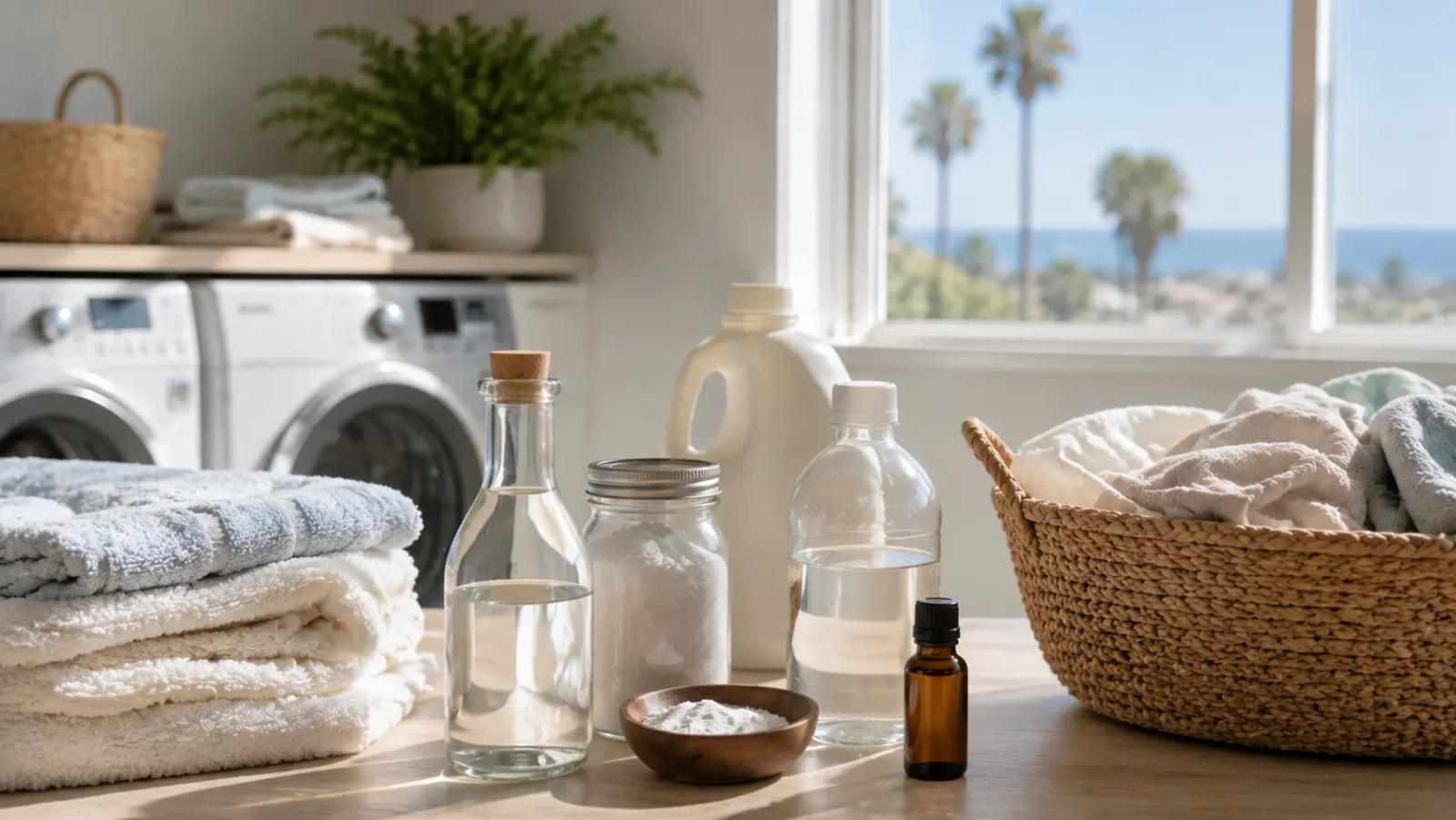
Vinegar, borax, and even hydrogen peroxide reduce bacteria. They don't reliably kill everything the way a product that claims to kill 99.9% of germs does. If you're using these methods to avoid bleach because it irritates skin or damages fabric, that's a completely reasonable trade-off for everyday laundry. If someone in your household is immunocompromised, dealing with a serious illness, or you're washing items that came into contact with a real biohazard, bacteria can survive on fabric for weeks, and that's not a situation where you should stack home remedies and hope for the best.
Laundry Pickup and Delivery in North County San Diego
Combining two or three of these methods, hot water plus hydrogen peroxide plus a sun-dry, gets you meaningfully closer to real disinfection without a drop of bleach. It also means timing rinse cycles right and remembering to restock hydrogen peroxide before you run out, on top of everything else on a given week. That's exactly why we built MAXfresh around ozone-based cold-water cleaning instead of chemical disinfectants. Ozone breaks down bacteria and viruses at a molecular level, the same basic mechanism as sunlight and hydrogen peroxide, but far faster and far more consistent. Our MAXfresh Water system inactivates over 99.9% of common germs, bacteria, and viruses, including tougher pathogens like MRSA and C. diff, without high heat that wears out fabric and without the residue or fumes that come with chemical sanitizers. That means one less thing you have to double-check before you trust what's coming back to your closet.

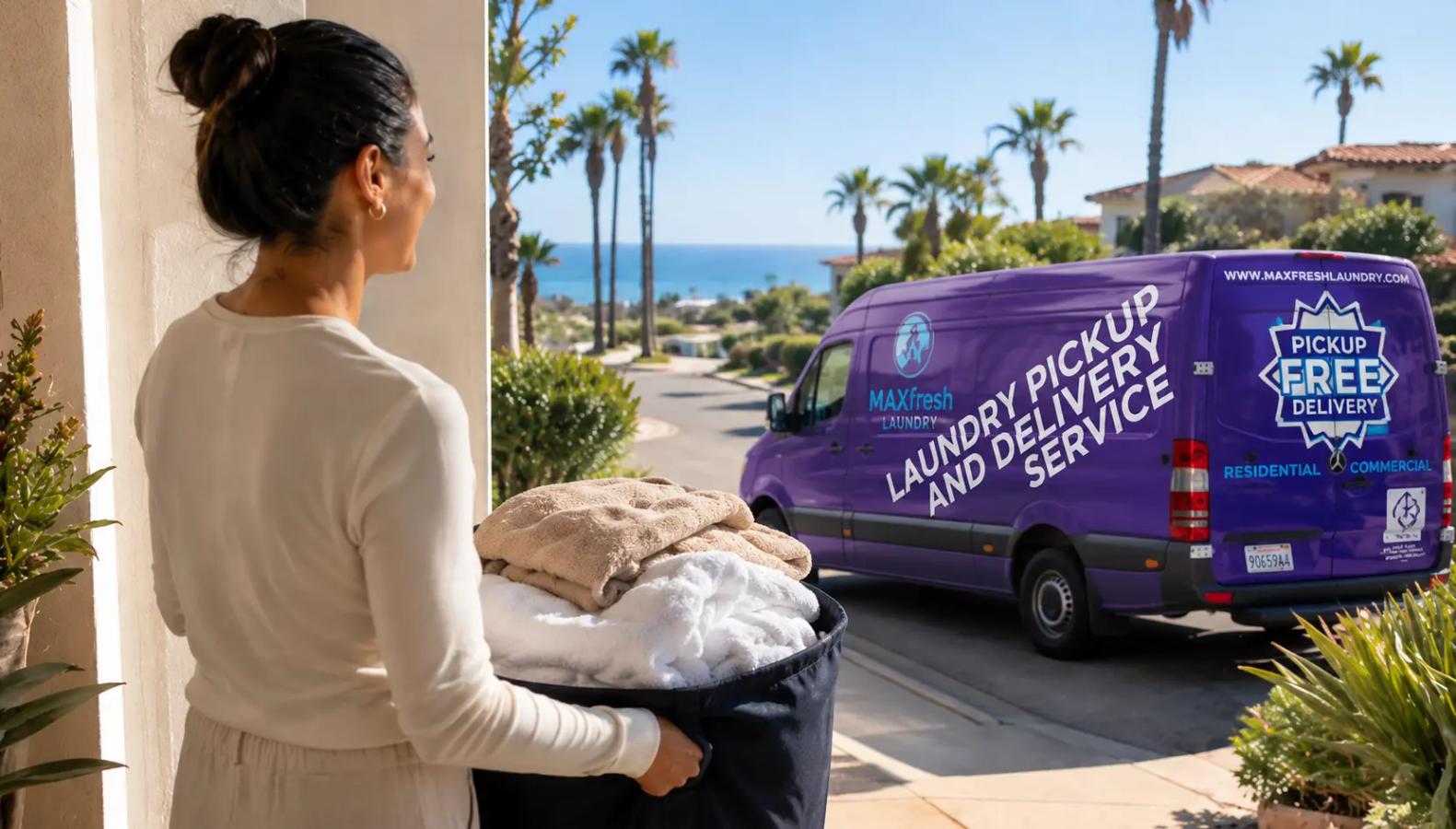
For households and businesses across North County San Diego, that means you skip the guesswork and the trips to restock hydrogen peroxide and borax. We pick up, wash, and deliver back next-day, so the disinfecting happens without becoming one more task on your list. Every order runs through its own load, never combined with anyone else's laundry to save time. No mixing. No shortcuts. It's the same reasoning whether you're a parent managing allergies at home, a caregiver doing laundry for someone recovering from illness, or a salon, gym, or clinic that needs linens genuinely sanitized between clients, not just freshened. Every order comes back with a delivery photo confirmation and no hidden fees, so handing over your laundry doesn't mean handing over your peace of mind.
If you've made it this far because you're tired of choosing between "clean enough" and "actually clean," you already know home remedies have a limit. You don't have to keep testing that limit load by load.