


How to Wash Delicates Without Ruining Them

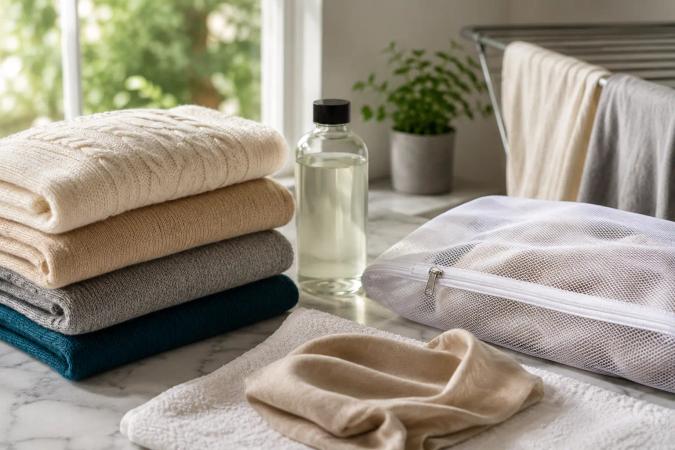
The cashmere sweater that came out of the wash two sizes smaller. The silk blouse that lost its sheen after one cycle. The lace bralette with a stretched strap that no longer holds its shape. These aren't laundry accidents — they're entirely predictable outcomes of treating delicate fabrics like everyday clothes.
Delicates aren't difficult to care for once you understand what each fabric actually needs. This guide covers every step: reading the label, choosing the right method, drying without damage, and the mistakes that ruin more delicate clothing than anything else.
What Counts as a Delicate?
Before anything else — "delicates" isn't just a washing machine setting. It's a category of fabrics that share two properties: they're easily damaged by heat and agitation, and they don't recover well once that damage happens.
That includes:
Silk — protein-based fiber that weakens in heat, loses its sheen with harsh detergents, and distorts when wrung out.
Wool and cashmere — animal fibers that felt and shrink irreversibly in warm water. Cold water only, always. Cashmere is more fragile than regular wool and deserves hand washing almost every time.
Lace — open-weave construction that snags on anything in the drum and tears under normal agitation.
Chiffon and organza — lightweight, easily stretched out of shape, and damaged by even moderate heat.
Spandex and activewear — the elastic breaks down with heat and fabric softeners, which coat the fibers and destroy moisture-wicking properties. If your gym clothes are holding onto odor even after washing, that's a separate problem with a separate fix — covered in detail here.
Embellished items — beading, sequins, embroidery, or appliqué that will snag other clothing, loosen with agitation, or melt under heat.
When in doubt: if it feels expensive or fragile, treat it like a delicate.
Step 1: Check the Care Label
The care label is the only source of truth for how to wash a specific garment. Ignore it and you're guessing. The key symbols to know:
Hand wash only — a basin with a hand symbol. Do not put this in a machine under any circumstances.
Delicate/gentle cycle — a washing machine icon with a double underline. Machine washing is fine, but only on the gentlest setting with cold water.
Cold water wash — a bucket symbol with a single dot inside. Heat is the enemy for this item.
Do not wring — a twisted fabric symbol with an X. Press water out gently instead.
Dry flat — a square with a horizontal line through the middle. Hanging will stretch it.
Dry clean only — a circle. This one is worth respecting for structured items (blazers, dresses with boning, suede), but for simpler items labeled dry clean only as a precaution, hand washing in cold water is usually safe. If the garment is expensive or irreplaceable, don't risk it.
A note on the 30-minute laundry rule: This refers to the recommendation to remove clothes from the washing machine within 30 minutes of the cycle ending. For delicates especially, this matters — damp fabric left sitting in a closed drum gets musty quickly and can develop mildew in warm weather. Silk and wool are particularly susceptible. Make it a habit to move delicates to drying immediately when the cycle ends.
Step 2: Sort Your Delicates Before Washing
Delicates need their own load — never mix them with jeans, towels, or anything with zippers, hooks, or rough texture. Beyond that, sort within the delicates pile itself:
- Separate lights from darks and brights to prevent dye transfer
- Keep silk away from lace (lace snags silk easily even in a mesh bag)
- Wash heavily embellished items alone or in individual mesh bags
If you're still building your sorting habits, our full laundry sorting guide covers the complete system.
Step 3: Choose Your Washing Method
Hand washing delicates
Hand washing is the right choice for silk, cashmere, lace, anything labeled "hand wash only," and anything you genuinely can't afford to damage. It's gentler than any machine cycle.
- Fill a clean sink or basin with cool or lukewarm water. Never hot.
- Add a small amount — roughly a teaspoon — of gentle, pH-neutral detergent. Woolite, The Laundress Delicate Wash, or any detergent labeled for delicates works. Avoid regular detergent entirely.
- Submerge the garment and swish gently for one to two minutes. Don't scrub, twist, or rub aggressively.
- Let it soak for up to 10 minutes for anything with odors or light staining.
- Rinse thoroughly in cool water until no soap remains — detergent residue left in delicate fabrics attracts dirt and weakens fibers over time.
- Never wring. Instead, lift the garment out and gently press it between your palms to remove excess water, then proceed to drying (see below).
Machine washing delicates
Many delicates can go in a machine safely, as long as you follow the right steps.
- Place items in a mesh laundry bag. This is non-negotiable — it shields delicates from friction against the drum and other items.
- Select the delicate or gentle cycle. This uses minimal agitation and a slow spin, which is what protects the fibers.
- Cold water only. Even lukewarm can cause shrinkage in wool and silk.
- Use a gentle detergent — the same kind as for hand washing.
- Skip the fabric softener. On synthetics and activewear especially, softener coats the fibers and breaks down elasticity and moisture-wicking over time.
- Remove items immediately when the cycle ends. Leaving delicates sitting in a damp drum causes creasing and, in warm weather, mildew.
What setting should you wash delicates on? The delicate or hand wash cycle on most machines runs at low agitation, slow spin, and uses cold water automatically. If your machine doesn't have either, select the lowest agitation and spin speed available with cold water.
Step 4: Drying Delicates Without Damage
The dryer is where most delicate clothing gets destroyed. High heat shrinks wool irreversibly, melts elastane in activewear, dulls silk, and weakens lace. For almost all delicates, air drying is the only safe option.
The towel-roll technique
This is the fastest way to remove water without wringing or stretching:
- Lay a clean dry towel flat on a surface.
- Place the damp garment on top, reshaping it to its original dimensions.
- Roll the towel and garment up together, like a Swiss roll.
- Press firmly along the length of the roll to transfer moisture into the towel.
- Unroll, remove the garment, and proceed to drying.
Lay flat or hang?
Lay flat — wool, cashmere, heavier knits, and anything that will stretch under its own wet weight. Use a clean dry towel or a mesh drying rack, and reshape the garment before it dries.
Hang — silk dresses, lightweight blouses, structured synthetic pieces. Use a padded hanger to avoid shoulder marks. Keep out of direct sunlight, which fades color and degrades silk fibers.
Never hang — wet knitwear. The weight of the water will stretch it permanently out of shape.
For more on air drying technique — including how to keep clothes soft without a dryer — our air drying guide covers everything.
Common Mistakes That Ruin Delicates
Most delicate clothing damage comes from the same handful of errors:
Using regular detergent. Standard detergents are formulated for cotton and synthetics — the enzymes and surfactants in them break down delicate fibers. Always use a gentle, pH-neutral formula.
Washing in warm or hot water. Even "warm" is too much for wool and cashmere. Cold water only for anything that can shrink or felt.
Skipping the mesh bag. One cycle without a mesh bag can snag lace beyond repair or stretch a silk strap. They cost a few dollars and prevent expensive losses.
Wringing out wet fabric. Twisting silk distorts the weave. Twisting wool causes felting. Always press — never wring.
Leaving items in the machine. A wet silk blouse sitting in a warm drum for an hour will come out wrinkled and potentially smelling musty. Remove immediately.
Putting delicates in the dryer "just this once." Heat damage to wool and cashmere is irreversible. One trip through the dryer on the wrong setting can permanently shrink a garment by one or two sizes.
Using fabric softener on activewear. It coats the fibers and ruins the moisture-wicking and stretch properties that make activewear worth wearing.
Caring for Delicates Between Washes
How you store delicates matters as much as how you wash them.
Fold, don't hang, knitwear. Even dry cashmere and wool will slowly stretch on a hanger over time. Fold these and store them flat.
Use padded hangers for silk and structured pieces. Wire hangers create shoulder marks that can permanently distort the fabric.
Store away from direct sunlight. UV light fades color and degrades silk and wool fibers over time. A drawer or garment bag beats an open closet in a sunny room.
Air garments out before storing. Body heat and moisture trapped in a folded garment can cause odors and, in humid climates, mildew. A few hours on a hanger before folding away makes a difference.
Spot clean between washes. Most delicates don't need a full wash every time they're worn. For a small mark, dab with cool water and a drop of gentle detergent, rinse, and lay flat to dry. You'll extend the time between full washes, which extends the life of the garment.
When to Hand It Off
Some delicates — heavily embellished pieces, structured garments, anything with significant sentimental or monetary value — are worth sending to a professional rather than risking at home.
At MAXfresh, every load handled through our service uses our MAXfresh® Water ozone technology, which cleans and sanitizes in cold water without heat or harsh chemicals. Cold water ozone washing is one of the gentlest cleaning methods available — which makes it particularly good for fabrics that hot water and strong detergents would otherwise stress. Your delicates come back clean, sanitized, and without the fiber damage that a standard home wash cycle causes over time.