


How to Wash Linen Pants Without Shrinking or Wrinkling Them

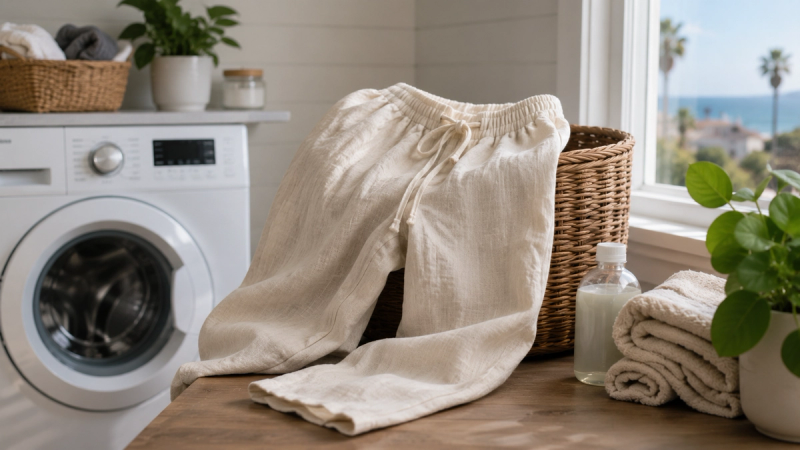
Turn linen pants inside out, wash them on a gentle cycle in cool or lukewarm water with a mild liquid detergent, and air dry them. Most linen pants can be safely machine washed unless the care label specifies otherwise.
Check the Care Label First
Before you toss your linen pants into the washing machine, take a moment to read the care label. While the instructions should always be your starting point, they're not always as strict as they seem.
Many unstructured, unlined linen pants are labeled "Dry Clean Only" to reduce the risk of returns caused by improper washing rather than because the fabric cannot handle water. If your pants are made from 100% linen and don't have a delicate lining, structured tailoring, or blended fibers like silk or wool, they're usually safe to machine wash or hand wash on a gentle cycle.
Blended fabrics require a little more care. Linen-silk and linen-wool blends are more delicate and often need dry cleaning or a gentle hand wash in cold water, depending on the manufacturer's instructions. Linen-cotton blends are generally easier to maintain and can usually be washed using the same method as pure linen.
When in doubt, follow the care label, especially for premium garments, tailored styles, or specialty fabric blends.
Does Linen Shrink?
Yes, but not as much as many people expect. Pure linen typically shrinks about 3% to 5% during the first wash, while untreated, non-pre-shrunk fabric can shrink by as much as 10%. Most modern linen pants are pre-washed or pre-shrunk before they're sold, so any additional shrinkage is usually minor.
The first wash is the most important. Wash new linen pants in cool or lukewarm water below 90°F to allow the fibers to relax gradually. After that, you can continue washing them in cool or lukewarm water up to 105°F on a gentle cycle.
The biggest cause of unwanted shrinkage isn't water—it's heat. Repeated washing in hot water or drying on high heat gradually weakens flax fibers, leading to additional shrinkage, deeper wrinkles, and a shorter lifespan for the garment.
If your pants are labeled pre-shrunk or pre-washed, you have a little more flexibility, but it's still best to avoid high temperatures. Gentle washing, mild detergent, and air drying are the simplest ways to preserve the fit, shape, and natural drape of your linen pants for years to come.
How to Wash Linen Pants
Washing linen pants is less about complicated techniques and more about using the right settings. Gentle handling, mild detergent, and avoiding high heat will keep the fabric breathable, comfortable, and looking its best.
- Empty the pockets and fasten closures. Button the waistband, zip the zipper, and loosely tie any drawstrings. This helps the pants hold their shape and prevents loose hardware from snagging the fabric.
- Turn the pants inside out. This protects the outer surface from friction, helps reduce fading, and keeps the weave looking newer for longer.
- Sort by color. Wash light and dark linen separately, especially during the first few washes when darker dyes are more likely to bleed. A color catcher sheet can provide extra protection if you're washing new dark linen.
- Avoid washing with heavy fabrics. Jeans, towels, and other bulky items create unnecessary friction that can roughen the surface of linen and increase wrinkling.
- Select a gentle cycle. Use cool or lukewarm water between 90°F and 105°F with a low spin speed whenever possible. A gentle cycle cleans effectively while putting less stress on the natural flax fibers.
- Use a mild liquid detergent. Liquid detergents dissolve more easily than powders in cooler water, reducing the chance of residue on the fabric. Choose a pH-neutral detergent designed for delicate fabrics, and avoid products containing enzymes or optical brighteners.
- Skip fabric softener. Linen naturally softens with wear, while fabric softener can leave behind a coating that reduces its breathability. If you'd like a softer feel, add half a cup of distilled white vinegar to the rinse cycle instead.
- Remove the pants promptly. As soon as the cycle finishes, shake out the pants, smooth the fabric with your hands, and prepare them for air drying. Letting wet linen sit in the washer encourages deep wrinkles.
How to Hand Wash Linen Pants
Hand washing is a good option for lightweight linen, delicate garments, or pants with decorative details.
Fill a clean sink or basin with cool water below 90°F and mix in a small amount of mild liquid detergent. Submerge the pants and gently move them through the water for a few minutes. Avoid scrubbing or twisting the fabric, as wet flax fibers are more vulnerable to stretching.
Rinse thoroughly with clean, cool water until all detergent is gone. For extra softness, add half a cup of distilled white vinegar to the final rinse. Lay the pants flat on a clean towel, roll the towel up, and press gently to absorb excess moisture before air drying.
How to Remove Stains from Linen Pants
Treat stains as soon as possible. Fresh stains are much easier to remove than dried ones. Before using any stain remover, blot away excess liquid or residue with a clean cloth instead of rubbing, which can push the stain deeper into the fibers. Avoid ironing or machine drying stained linen until you're sure the stain is gone.
Food and drink: Blot with cold water, then apply a small amount of mild liquid detergent. For stubborn stains, use a baking soda paste, let it sit for 10 to 15 minutes, then rinse thoroughly.
Oil and grease: Cover the stain with cornstarch or baking soda and let it absorb the oil for about 30 minutes. Brush away the powder, apply a few drops of dish soap, and rinse after 10 to 15 minutes.
Coffee and tea: Flush the stain from the back of the fabric with cold water. If needed, dab the area with white vinegar or apply a baking soda paste before rinsing.
Red wine: Blot immediately, pour a small amount of club soda over the stain, then cover it with table salt while it's still damp. Brush away the salt after a few minutes and rinse well.
Sweat and yellow stains: Soak the stained area in equal parts cool water and white vinegar for about 30 minutes. Older stains may benefit from a baking soda paste before rinsing.
Makeup: Dab with makeup remover or rubbing alcohol using a cotton pad, testing an inside seam first for colorfastness.
Grass and dirt: Apply liquid detergent or oxygen bleach, allow it to sit for about 10 minutes, then rinse.
After pre-treating the stain, wash the pants using the care instructions above. If the stain remains, repeat the treatment before the fabric dries.
Never use chlorine bleach on linen. It weakens flax fibers and can permanently discolor the fabric. Oxygen bleach is a safer choice for most washable linen garments when used according to the product directions.
How to Soften New Linen Pants
New linen often feels crisp because the flax fibers haven't relaxed yet. The easiest way to soften linen is simply to wear and wash it regularly, but you can speed up the process without damaging the fabric.
Add half a cup of baking soda to the wash drum and half a cup of distilled white vinegar to the rinse cycle. Air dry the pants until they're just slightly damp, then tumble them on the lowest heat setting for no more than 10 minutes if the care label allows. Repeat this process over the first few washes, and the fabric will gradually become softer while maintaining its strength and breathability.
Avoid commercial fabric softeners. They coat the fibers instead of softening them naturally, reducing the moisture-wicking and breathable qualities that make linen comfortable in warm weather.
How to Dry Linen Pants
Drying linen correctly is just as important as washing it. High heat can cause shrinkage, deepen wrinkles, and shorten the life of the fabric, so air drying is the safest option for most linen garments. The way you air dry linen also affects how soft it feels once it's dry, and simple adjustments can help prevent stiffness without relying on fabric softener.
Hang Dry
For lightweight or everyday linen pants, hang them from the waistband on a padded or wide hanger while they're still damp. Smooth the waistband, pockets, and legs with your hands to remove creases before the fabric dries. As the moisture evaporates, gravity helps the fabric dry straighter, reducing wrinkles naturally.
Dry Flat
Heavier linen, wide-leg styles, or pants that are prone to stretching are better dried flat. Lay them on a clean towel or mesh drying rack, reshape them to their original dimensions, and turn them over once halfway through drying so both sides dry evenly.
Can You Put Linen Pants in the Dryer?
If the care label allows it, use the lowest heat or air-fluff setting and remove the pants while they're still slightly damp. Hang them immediately to finish drying. Avoid medium or high heat, which can shrink linen and set wrinkles more deeply into the fabric.
How to Reduce Wrinkles While Drying
Linen develops wrinkles more easily than many fabrics, but a few simple habits keep them under control.
- Remove the pants from the washer as soon as the cycle finishes.
- Shake them out before hanging or laying them flat.
- Smooth the fabric with your hands while it's still damp.
- Give the pants enough space for air to circulate while drying.
- Fold or hang them only after they're completely dry.
If your linen feels rough after air drying, it's usually the drying method rather than the fabric itself. Small changes in airflow and drying technique can make a noticeable difference, especially for natural fibers. You can find more practical tips in How to Air Dry Clothes Without Making Them Stiff.
For a sharper finish, steam or lightly iron the pants while they're still slightly damp.
How to Iron Linen Pants
Linen's relaxed texture is part of its appeal, but it's easy to achieve a crisp finish when needed.
Before ironing, make sure the fabric is clean and completely stain-free. Heat can permanently set stains, making them much harder to remove later.
Iron linen while it's still slightly damp. If the pants have already dried, lightly mist them with water or use the steam function on your iron. Set the iron to the linen setting or a medium-high temperature recommended by the manufacturer.
Always iron the pants inside out to help protect darker colors from developing shiny spots. For delicate or dark-colored linen, place a pressing cloth between the iron and the fabric. Press and lift the iron rather than sliding it across the fabric, which can stretch damp flax fibers.
Once finished, hang the pants until they're completely cool before folding or wearing them. This helps prevent fresh wrinkles from forming.
How to Store Linen Pants
Proper storage helps linen keep its shape between wears and prevents unwanted creases or mildew.
Fold linen pants neatly along their seams and store them in a drawer or on a shelf. If you prefer hanging them, fold them over a wide hanger bar rather than clipping them by the cuffs, which can stretch the fabric over time.
Always store linen in a cool, dry place with good airflow. Avoid plastic garment bags or airtight containers, as trapped moisture can lead to mildew. Breathable cotton garment bags are a better choice for seasonal storage.
Before storing linen for an extended period, wash the pants to remove body oils and stains, then make sure they're completely dry. Cedar blocks or lavender sachets can help discourage moths without exposing the fabric to harsh chemicals.
Because linen naturally resists odors, most pants only need washing after every two or three wears. Rotating between multiple pairs also gives the fibers time to recover their shape.
Common Mistakes to Avoid
Even with the right washing routine, a few common habits can shorten the life of your linen pants.
Washing with heavy fabrics: Jeans, towels, and sweatshirts create excess friction that can roughen the surface of linen and increase wrinkling.
Leaving pants in the washer: Wet linen wrinkles quickly. Remove the pants as soon as the cycle finishes and reshape them before drying.
Using fabric softener regularly: Fabric softener coats flax fibers, reducing the breathability and moisture-wicking properties that make linen comfortable in warm weather.
Using excessive heat: Hot water, high dryer temperatures, and overheating with an iron all contribute to unnecessary shrinkage and premature fiber wear.
Twisting or wringing wet linen: Wet flax fibers are more flexible than dry ones. Wringing can stretch the fabric and distort its shape.
Storing linen while damp: Even a small amount of trapped moisture can encourage mildew and musty odors during storage.
Natural fibers like linen respond well to gentle cleaning methods that don't rely on harsh chemicals or excessive heat. Ozone laundry uses activated oxygen to help remove odors, bacteria, and everyday soil while being gentler on fabrics, making it a practical option for maintaining linen over time.
If Your Linen Pants Shrank
Minor shrinkage is common after the first wash, especially if the fabric wasn't pre-shrunk. If your linen pants feel slightly tighter or shorter, you may be able to restore some of their original shape.
Fill a sink or basin with lukewarm water and add a small amount of hair conditioner or a gentle fabric conditioner. Let the pants soak for about 30 minutes, then rinse lightly without completely removing the conditioner. Lay the pants flat on a towel and gently stretch the waistband, legs, and inseam back toward their original size. Avoid pulling too hard, as wet flax fibers can lose their shape. Leave the pants to air dry flat.
This method can help with minor shrinkage, but it won't reverse damage caused by repeated hot washes or high-heat drying. If the pants have shrunk significantly, the change is usually permanent, which is why following the recommended washing and drying instructions is the best way to preserve their fit.