


Does Cold Water Clean Clothes as Well as Hot Water?


For most everyday laundry, yes. Paired with a good enzyme-based laundry detergent, cold water lifts sweat, dirt, food spills, and the general grime of a normal week just as well as a hot wash. But "does cold water clean clothes as well as hot water?" is only half the question. Clean and germ-free are not the same thing, and in cold water your washing machine only handles one of them. Most laundry routines miss that gap, and it shows up in the towels, the sheets, and the gym clothes that smell fine for about ten minutes after you put them on.
Why Is Cold Water Good for Laundry?
The old rule that hot water cleans better came from a time when detergents needed heat to do their job. That's no longer true. ENERGY STAR, the federal energy-efficiency program, says that unless you're dealing with oily stains, cold water generally does a good job of cleaning.
Modern detergents rely on enzymes, which target specific kinds of soil: proteins from sweat and blood, starches from food, fats from skin. They keep working at lower water temperatures, just more slowly. Novonesis, one of the major makers of laundry enzymes, reports that a detergent with enzymes performs as well at 20°C (68°F) as the same detergent without enzymes does at 40°C (104°F). That's the chemistry behind switching to cold.

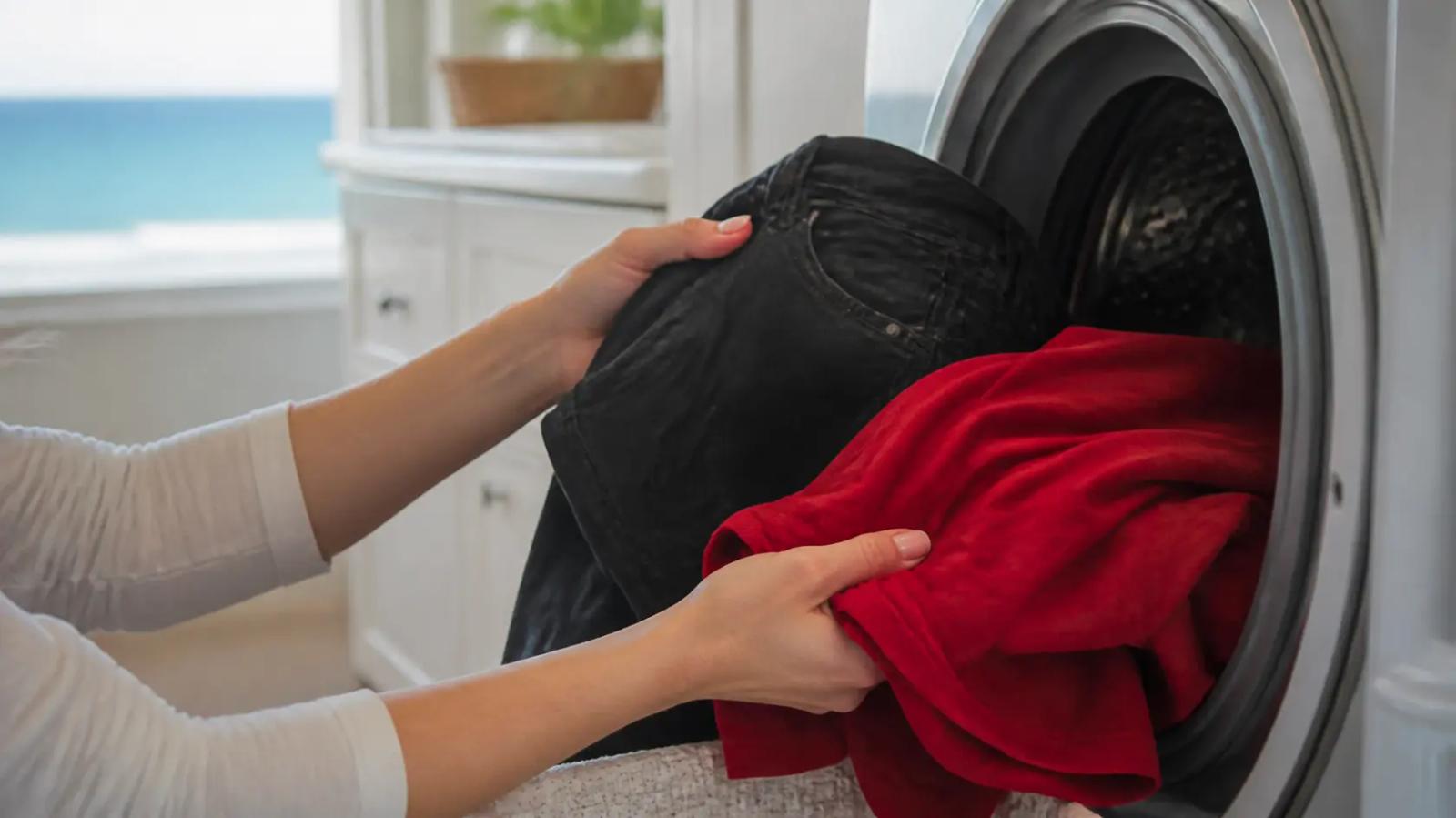
Cold water is gentler on fabric, too. Heat fades dyes and shrinks cotton. It also relaxes the elastic in waistbands and socks. Cold water washing protects all of it, which is why your black jeans stay black and your t-shirts keep their shape when cold is your default. It also helps with protein-based stains like blood and perspiration, which hot water can cook into the fibers and make permanent.
Then there's the energy needed to heat water. According to ENERGY STAR, water heating accounts for about 90% of the energy it takes to run a clothes washer, and every cold cycle skips it entirely. That's energy you stop paying for on every load.
What Temperature Is Cold Water on a Washing Machine?
Cold water isn't as cold as it sounds. According to The Spruce, a washer's cold setting should run between 60°F and 80°F.
The number to watch is the bottom of that range. Below 60°F, cleaning results start to drop, and incoming tap water can dip well under that in winter. If your machine offers both "tap cold" and "cold," the regular cold setting usually blends in a little warm water to stay in the useful zone.
What Are the Downsides of Cold Water Washing?
Heavy grease and body oil are the biggest problem. Think work clothes with motor oil, kitchen towels, or pillowcases that have absorbed months of skin oils. Warmer water helps loosen those fats in a way cold water struggles to match.


Powder detergent causes trouble too. Powders need warmth to dissolve fully, and in cold water they can leave a chalky residue behind. If cold is your default, use a liquid detergent formulated for cold water.
Then there are heavily soiled loads. A muddy soccer uniform or a stained tablecloth needs help before it hits the wash. Pretreat the stain and give it time to work, and cold water can usually finish the job.
Each one has a simple workaround. One shortfall doesn't.
Does Washing Clothes in Cold Water Kill Germs?
No. Washing clothes in cold water removes germs, but it doesn't kill them.
That's not unique to cold water. As Tide explains in its laundry hygiene guide, detergent and agitation physically remove germs without killing them. Products that kill germs are a separate category, regulated by the EPA.
For most of what you wear, removal is plenty. A t-shirt worn to the office doesn't need a kill step.
Some loads are different. Towels stay damp for hours and give bacteria a place to settle in. Sheets and pillowcases soak up a week of sweat and skin. Underwear and gym clothes sit closest to the body. And if someone in your house has been sick, everything they've used falls into the same category. Tide's own guidance puts those same loads in a warm water wash of 80°F or higher for an extra cleaning boost, with sanitizing reserved for laundry from someone who's ill.


If you want to tackle that at home without bleach, here's how to disinfect laundry without bleach. The bigger question is whether hot water solves the problem.
How Do You Kill Germs in Laundry Without Hot Water?
Most people assume they can just use hot water. In a 2025 American Cleaning Institute survey, 41% of U.S. adults said they wash their clothes in hot water most of the time. The trouble is that a regular hot setting isn't hot enough to count as a sanitizing step.
The Spruce puts a washer's hot setting at 130°F or above. Sanitize cycles are another level. According to Tide, they generally need to reach 149°F, and the machine gets there with its own internal heater because household hot water won't.
The other sanitize option Tide describes pairs 120°F water with an oxygen additive, because the water alone can't do it. Hot water earns its keep on grease. As a germ killer, it's overrated.
That leaves you with three ways to kill germs at home, each with a cost.
A sanitize cycle works if your washer has one and your fabric can survive 149°F. Most colors, synthetics, and anything with elastic can't.
An EPA-registered laundry sanitizer is the chemical route. You add it to a hot wash, following the product label. It works, but it's another product to buy, and it has to match your fabric.
Then there's the dryer. Tide recommends the highest heat the care label permits for contaminated laundry, but that brings back the shrinking and fading you were avoiding in the wash.
Or skip heat entirely.
Ozone is a highly reactive form of oxygen that can be dissolved into cold water. It breaks down bacteria and odor-causing compounds through oxidation, so fabrics never see high heat. At MAXfresh, every residential load is washed in cold water infused with ozone unless you ask otherwise, and MAXfresh reports its system eliminates over 99.9% of common bacteria, mold, and mildew. You can see how MAXfresh's cold-water ozone cleaning works.
Ozone does have a limit: it won't dissolve grease, so detergent stays in the wash, just less of it. That combination is what lets towels and sheets come back fresh without a 149°F cycle.
If you'd rather never think about water temperature again, MAXfresh picks up your laundry and brings it back washed, dried, and folded the next day.
When Should You Use Hot Water for Laundry?
The right water temperature depends on three things: the fabric, how dirty it is, and how much the germs matter. Here's how that plays out for the laundry loads most households run every week.
| Load | Best water temperature | Why | |
|---|---|---|---|
Everyday clothes, jeans, t-shirts | Cold | Removes everyday soil and protects color and fit | |
Darks and brights | Cold | Reduces fading and dye bleeding | |
Delicates, wool, silk | Cold | Heat shrinks and damages fibers; follow the care label | |
Blood or sweat stains | Cold | Hot water can set protein stains permanently | |
Towels, sheets, underwear, gym clothes | Warm or hot, or add a germ-killing step | Higher germ load and body oils | |
Cotton whites | Warm or hot, if the label allows | Helps lift body oils and dinginess | |
Greasy work clothes, kitchen towels | Hot or warm | Heat loosens fats and oils | |
Laundry from someone who's sick | Warmest the label allows, plus a sanitizer and high-heat dry | Removal alone isn't enough |
The pattern is simple. Cold water is the best default for most of your laundry, and warm or hot water earns its place for oily loads. For germs, temperature alone was never the answer.
FAQs About Cold Water Laundry
Can you wash towels in cold water?
Yes, and cold water will get them clean. Bath towels shared by more than one person benefit from warmer water or a germ-killing step every so often.
Is it better to wash stinky clothes in hot or cold water?
Usually neither. Lingering odor comes from body oils and bacteria that weren't fully removed. Warm water helps break down the oils, and an enzyme detergent helps with the rest. If clothes still smell after washing, check for an overloaded machine or too little detergent first.
Do you wash white clothes in hot or cold water?
Cotton whites can take warm or hot water if the label allows; synthetics and anything with elastic belong in cold.
What temperature kills bacteria when washing clothes?
149°F, which is what washer sanitize cycles generally need to reach, according to Tide. A regular hot setting falls short of that.
Can bacteria live on clothes after washing?
Some can. A regular wash leaves a few behind, and damp fabric gives them room to regrow. Moving clothes to the dryer promptly and drying them completely stops that.
Does ozone laundry really work?
Ozone is a strong oxidizer that works well in cold water. MAXfresh reports its ozone system eliminates over 99.9% of common bacteria, mold, and mildew. Detergent still handles the grease.