


How to Get the Smell Out of Towels (Salons, Gyms & Spas)

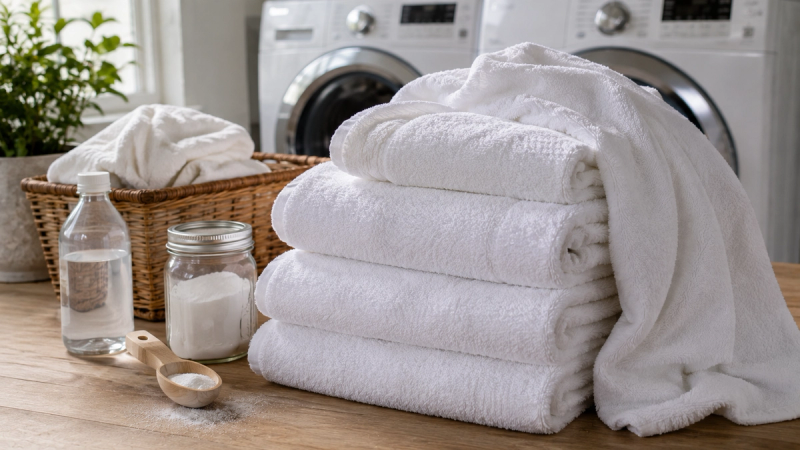
To get the sour smell out of towels quickly, strip the trapped bacteria and residue with two hot washes: the first using 1 cup of white vinegar, and the second using half a cup of baking soda.
The underlying issue is a microscopic layer of bacteria and buildup coating the cotton. Once you strip that barrier away, the musty odor disappears.
What most guides skip is that the exact same sour smell stems from different sources depending on usage. A gym towel, a salon towel, and a home bath towel all smell sour, but the chemistry and the fix vary.
Why Towels Hold Onto Odor
Towels are thick, dense, and engineered to retain moisture. Whenever a towel stays damp for more than a few hours, bacteria multiply rapidly inside the core fibers, producing the sour compounds you smell the moment the towel gets warm.
The specific buildup varies by environment:
- Salons and Barbershops: Hair sprays, styling products, and chemical treatments coat towel fibers in a waxy residue that regular detergent cannot dissolve. This film traps bacteria underneath, and subsequent body heat reactivates the smell. Learning proper techniques for keeping salon towels hygienic is essential to breaking this cycle.
- Gyms and Fitness Studios: Sweat carries proteins and lipids that bond tightly to cotton. Standard washing leaves these molecules behind, and your next workout reheats them into a sharp stench.
- Spas and Massage Practices: Body oils, lotions, and essential oils create a layered buildup. Essential oils leave a water-repellent film that locks bacteria inside.
- Microfiber Towels: Common in salons and auto detailing, microfiber features ultra-fine strands that hold more residue per square inch than cotton. It also degrades faster under high heat, limiting how aggressively you can strip it.
Over time, heavy detergent use and fabric softener compound these issues, leaving behind a gummy residue that feeds bacteria rather than washing away.
The Sanitization Threshold Most Guides Skip
Most laundry advice relies on the generic instruction to use hot water, but machines operate on strict temperature numbers:
- 120°F: Bacteria that cause towel odor begin to weaken at this temperature. However, most residential washers max out between 120°F and 130°F on their hottest setting, which only slows bacterial growth instead of killing it.
- 140°F and Above: Reliable thermal sanitization requires a sustained temperature of 140°F or higher. Commercial washers regularly reach 160°F+, which is why professionally laundered towels stay fresh significantly longer.
Hard Water: The Hidden Cause Nobody Talks About
If your towels smell sour no matter how many times you strip them, hard water is likely to blame. Dissolved calcium and magnesium in your water supply bind to detergent molecules, forming a chalky mineral crust inside the fibers that traps bacteria.
Signs of hard water interference:
- Towels feel stiff or crusty even after washing.
- White towels develop a gray or yellow tint.
- A chalky white buildup forms around faucet heads or inside the washer drum.
For households, a water softener or a borax booster helps break the mineral cycle.
Three Methods That Actually Work
Method 1: The Vinegar and Baking Soda Strip
This is the most effective at-home fix for standard cotton towels.
- Step 1: Load towels into the washer without any detergent.
- Step 2: Pour 1 cup of white vinegar directly into the drum or the fabric softener dispenser.
- Step 3: Run the hottest cycle available. Hot water opens the cotton fibers, allowing the vinegar to dissolve bacterial biofilms and product buildup.
- Step 4: When that cycle finishes, run a second hot cycle with half a cup of baking soda to neutralize lingering odors and flush out loosened residue.
- Step 5: Dry completely on high heat.
Limitation: If your residential washer cannot reach 140°F, this method clears out the buildup but leaves surviving bacteria behind, meaning the smell will return faster than it would from a commercial wash.
Method 2: The Oxygen Bleach Soak
For towels with deep-set odors that vinegar alone cannot clear:
- Step 1: Fill a tub or large sink with warm water and a scoop of oxygen bleach (sodium percarbonate).
- Step 2: Allow the towels to soak for 1 to 2 hours.
- Step 3: Wring them out and run a standard hot wash with a small amount of mild detergent.
- Step 4: Dry fully on high heat.
Oxygen bleach safely breaks down the organic compounds that bacteria feed on without discoloring fabrics or damaging microfiber.
Method 3: Ozone Disinfection
For commercial settings or persistent home issues, exploring how ozone laundry works reveals why ozone-infused cold water destroys 99.9% of odor-causing bacteria at the cellular level without requiring high heat. Because it operates in cold water, it preserves the elasticity of microfiber and elastic bands while simultaneously sanitizing the washing machine drum.
How to Keep Towels from Smelling Again
- Never leave damp towels in a pile: Hang or spread them immediately after use to stop bacterial growth.
- Use half the recommended detergent: Excess soap leaves a sticky film that traps odors.
- Skip fabric softener entirely: It coats fibers in a silicone layer that ruins absorbency and traps bacteria. Use white vinegar in the rinse cycle instead.
- Clean your machine monthly: Run an empty hot cycle with a specialized washer cleaner or a cup of bleach to clear out buildup in the gasket and drum.
- Ensure full drying: If your dryer struggles with heavy loads, split them up. A slightly damp fold will sour within 24 hours.
When Home Methods Stop Working
- The washer is contaminated: Bacteria live in the gaskets, dispensers, and drums of machines that are never cleaned, reinfecting every load. A monthly empty hot cycle with a cleaner or bleach helps, but heavily contaminated units require professional servicing.
- The water supply is too hard: Continuous mineral buildup traps fresh bacteria every cycle, meaning the odor will return until a water softener or borax booster is introduced.
- The laundry volume exceeds residential capacity: Businesses running dozens of towels a day through a residential machine will never achieve true sanitization because consumer units cannot sustain 140°F under high frequency. Transitioning to commercial equipment or a commercial laundry service is necessary.