


The Complete Guide to Uniform Laundering for Salons, Spas, and Nail Studios

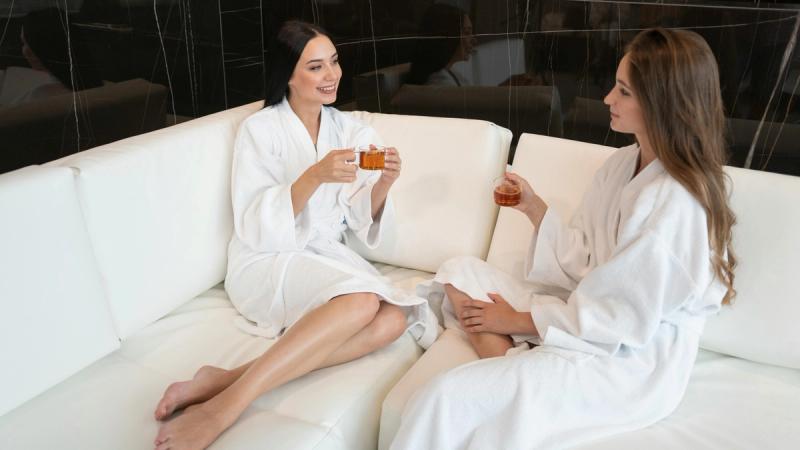
There is a moment in every salon visit when a client sits down in your chair and your towels, your cape, and your smock are the first things they notice before you say a word.
Those textiles communicate your standards. A scratchy, faintly chemical-smelling towel tells one story. A soft, clean, genuinely fresh towel tells another.
For salon owners, spa directors, and nail studio managers across North County San Diego — from Carlsbad and Encinitas to Oceanside and San Marcos — textile care is not a back-of-house afterthought. It is a direct extension of client experience. And yet it is one of the most commonly mismanaged aspects of salon operations.
This guide covers what salon laundry actually requires, how often different items need to be washed, what processes protect skin-adjacent fabrics, and when it makes sense to stop doing it yourself.
Why Salon Laundry Is Different from Regular Laundry
Walk into any busy salon on a Saturday and count the textiles in active use: towels at every station, shampoo bowl capes, color capes, robes in the waiting area, facial towels, pedicure liners, nail tech uniforms, front desk staff aprons. On a full day, a mid-size salon can generate 30 to 60 pounds of laundry — and that laundry is not ordinary household laundry.
Here is what makes it different:
Chemical saturation. Salon towels and capes absorb hair dye, bleach, developer, keratin treatments, perm solutions, nail polish remover, cuticle oils, and a range of other professional-grade chemicals. These substances require specific treatment to remove fully. Standard detergent at a standard cycle will not reliably break them down — particularly repeated bleach and developer exposure, which, if not properly processed, continues to degrade fabric fibers after washing.
Frequency demands. Unlike household laundry that might wash once a week, salon textiles cycle through use multiple times per day. A towel used for a shampoo service is damp, chemically exposed, and potentially in contact with multiple clients' scalp conditions within a single business day. The hygiene standard required is meaningfully higher than home laundry.
Skin contact sensitivity. Your clients sit in your chair and your fabrics touch their skin, hair, and nails directly. Residual detergent, fabric softener wax, or chemical carryover that stays in a towel after washing can irritate sensitive skin, cause allergic reactions, or interfere with professional services — particularly in nail care, where cleanliness of tools and fabrics is critical to infection prevention.
Professional appearance expectations. Fluffy, bright white towels and crisp, stain-free uniforms communicate professionalism. When those items look tired, stained, or worn, the impression lands before a client says a word about their experience.
How Often Should Salons Wash Towels, Capes, and Uniforms?
This is one of the most common questions we hear from salon owners. The short answer: more often than you think, and with better separation than you are probably doing.
Towels used in direct client contact — shampoo towels, facial towels, foot soak towels — should be washed after every single use. This is not just best practice; in California, the Bureau of Barbering and Cosmetology (BBC) and Department of Consumer Affairs have clear guidelines around sanitation requirements for client-contact textiles. Reuse without laundering is a licensing risk.
Color capes and shampoo capes accumulate chemical buildup. Washing after every use is ideal. At minimum, capes with visible dye or product transfer should be washed before reuse.
Robes and waiting area textiles used by clients during services should be laundered between every client use. They contact multiple body areas and need the same treatment as towels.
Staff uniforms should be washed daily, or at minimum after every full shift. Stylist smocks, nail technician aprons, and esthetician uniforms absorb chemicals, oils, and skin contact throughout the day. Wearing the same uniform across multiple days without laundering is both a hygiene issue and a professional appearance issue.
Pedicure liners and nail service textiles come into contact with clients' feet and nail products. These should be single-use disposable or laundered after every use, depending on your product setup.
What Detergents and Processes Are Safest for Salon Fabrics?
Standard commercial detergents work on everyday soil but are not formulated for the specific chemical matrix of salon laundry. Here is what matters:
Avoid fabric softeners on professional textiles. This is counterintuitive, but fabric softeners coat fibers with a waxy residue that reduces absorbency — exactly the opposite of what you want from a shampoo towel or facial cloth. Over time, softener buildup makes towels feel slick and less effective at absorbing moisture.
Use the right water temperature. Cold-water washing protects fabric integrity and color vibrancy in colored uniforms. For white towels, moderate temperatures are acceptable, but high heat accelerates fiber degradation. MAXfresh uses cold-water ozone technology that achieves superior sanitization without thermal damage — you can learn more about how MAXfresh Water works and why it is particularly effective for chemically-exposed salon textiles.
Ozone is ideal for chemical residue removal. Ozone dissolved in water at the molecular level breaks down organic compounds — including the chemical residues from salon products — more effectively than detergent alone. It also neutralizes odors without leaving fragrance or chemical residue on the fabric, which matters when your clients have fragrance sensitivities or chemical allergies.
Pre-treat stubborn chemical stains before washing. Hair dye, developer, and toner stains that are not pre-treated will set more deeply with each additional wash cycle. Develop a protocol for identifying and pre-treating stained items before they enter the main wash cycle.
Wash salon textiles separately from other items. The chemicals that saturate salon laundry should not cross-contaminate other fabrics. Processing salon towels in a dedicated cycle protects both the salon textiles and any other items in the load.
The Case for Outsourcing Salon Laundry
There is a real cost to doing salon laundry in-house that most owners do not calculate until they are already frustrated by it.
Time. A mid-size salon running multiple loads per day is looking at an hour or more of active laundry management — loading, transferring, folding, distributing. That time belongs to your staff, and in a service business, staff time is your most expensive resource.
Equipment wear. Salon laundry is hard on machines. The chemical load accelerates drum corrosion, seal degradation, and pump wear. Machines that process salon textiles regularly have shorter operational lifespans than those running ordinary household laundry.
Space. Commercial-grade washers and dryers require square footage that most salon floor plans did not anticipate. A folding station, drying rack, and storage area add to that footprint.
Inconsistency. When laundry is managed by whoever has time to run a load, quality becomes variable. The standard drops on busy days. Pre-treatment gets skipped. Loads sit wet in the drum. The result is textiles that wear out faster and a client experience that varies by when they happened to book.
At MAXfresh Laundry, our hair and nail salon laundry service is specifically designed for the demands of client-contact textiles. We pick up on a schedule that fits your operations, process your towels, capes, uniforms, and linens with our ozone-based system, and return them folded and ready to use. You do not manage logistics. You focus on clients.
What to Look for in a Salon Laundry Service
Not every pickup-and-delivery laundry service is equipped for salon work. When evaluating options, look for the following:
- Chemical-aware processing — Your provider should understand that salon textiles carry unique chemical loads and process them accordingly, not in a standard residential facility.
- Ozone or equivalent advanced sanitization — Given the skin-contact sensitivity of your clients, ozone disinfection is a meaningful upgrade over detergent-only processing.
- Separate processing guarantee — Your salon's textiles should never be mixed with other clients' laundry.
- Fragrance-free options — Many salon clients have chemical sensitivities or fragrance allergies. Heavily scented laundry products can interfere with services and cause client discomfort.
- Flexible scheduling — Salons often have irregular volume patterns. Your laundry service should accommodate your actual schedule rather than locking you into a rigid weekly rotation.
- Local presence — A local provider can respond faster to schedule changes, volume spikes, and special handling requests than a national service routing your laundry through a distant facility.
MAXfresh serves salons across Carlsbad, Encinitas, Oceanside, Bonsall, and throughout San Diego's North County. Our services page covers the full range of what we handle.
Frequently Asked Questions
Can you handle the volume for a high-traffic salon on a busy weekend?
Yes. We work with salons across the region and can accommodate high-volume pickups that align with your schedule. Contact us to establish a regular pickup cadence or to arrange on-demand pickups during busy periods.
Will ozone damage my colored uniforms or specialty fabrics?
No. Cold-water ozone processing is gentler on dyes and synthetic fabrics than hot water and bleach-based disinfection. Colored uniforms processed with ozone technology maintain their vibrancy longer. Learn more about MAXfresh Water.
I have delicate esthetician robes and specialty fabric items — can you handle those?
Yes. Our residential laundry service handles delicate and specialty fabrics with care. For salon owners who have a mix of standard towels and delicate items, we can process different fabric categories with appropriate settings.
Do you serve nail studios specifically, or just hair salons?
Both. Our hair and nail salon laundry service was designed to address the specific textile needs of both nail and hair care environments.
How do I get started?
Schedule a pickup or call us at (760) 608-5855. We will discuss your salon's specific textile types, volume, and scheduling needs and set up a service plan that works for your business.