


Wash and Fold vs Dry Cleaning: What's the Difference

Wash and fold cleans your everyday laundry with water and detergent. Dry cleaning uses a chemical solvent instead of water, built specifically to protect delicate or structured garments that a washing machine would ruin. That's the actual difference. What it doesn't tell you is that most people get this wrong in the same two ways, quietly, for years, without ever realizing it's costing them money or clothes.
Either they dry clean things that never needed it, overpaying for a decade on cotton shirts that would have been fine in a regular wash. Or they toss a wool sweater into a normal load because the care label felt optional, and it comes back three sizes smaller, a mistake that's easier to avoid than most people think. Neither mistake is about effort. It's about not knowing which category a garment actually falls into before it leaves your hands.
How Does Wash and Fold Differ From Dry Cleaning?
Wash and fold runs through a washing machine with water and detergent, gets dried, and comes back folded and ready to put away. It's the same basic process as laundry at home, just done at scale and on your own schedule. It's priced per pound rather than per item, which is what makes it cost-effective once you're past a handful of things, and most providers pick up and deliver on a next-day turnaround.
Dry cleaning swaps water for a chemical solvent, which sounds like a small technical detail until you understand why it matters. Water and heat are what damage structured or delicate fabrics: they can warp the shoulders of a blazer, strip the sheen from silk, or flatten the nap on velvet. A solvent cleans without any of that risk. That's also why it's priced per garment rather than by weight. Each item gets individual attention, sometimes hand-finished, sometimes pressed or steamed afterward, which is why the per-item cost runs higher even when the total bill on a small dry cleaning order looks smaller than a full bag of wash and fold.
That's the actual trade-off underneath both processes: volume and speed against precision and protection. The harder question is how you tell, garment by garment, which side of that trade-off you're actually on.
Which One Do Your Clothes Actually Need?
The fastest way to sort a full hamper is to check the care label on each garment before you decide anything. A "machine wash" symbol means it belongs in wash and fold. "Dry clean only" is not a suggestion, it's a warning about what water will do to that specific piece.
Beyond the label, a few patterns hold up across almost every closet:
- Everyday clothes, denim, cotton t-shirts, underwear, socks, towels, and bedding belong in wash and fold, every time.
- Wool and silk, cashmere, and anything with structure, like suits, blazers, and lined coats, generally need dry cleaning to keep their shape and texture intact.
- Dress shirts and cotton blouses can go either way depending on the fabric and finish. When in doubt, the label decides, not habit.
- Set-in or specialty stains, like wine, oil, or ink, sometimes need professional stain treatment either way, so flag them before drop-off rather than after.

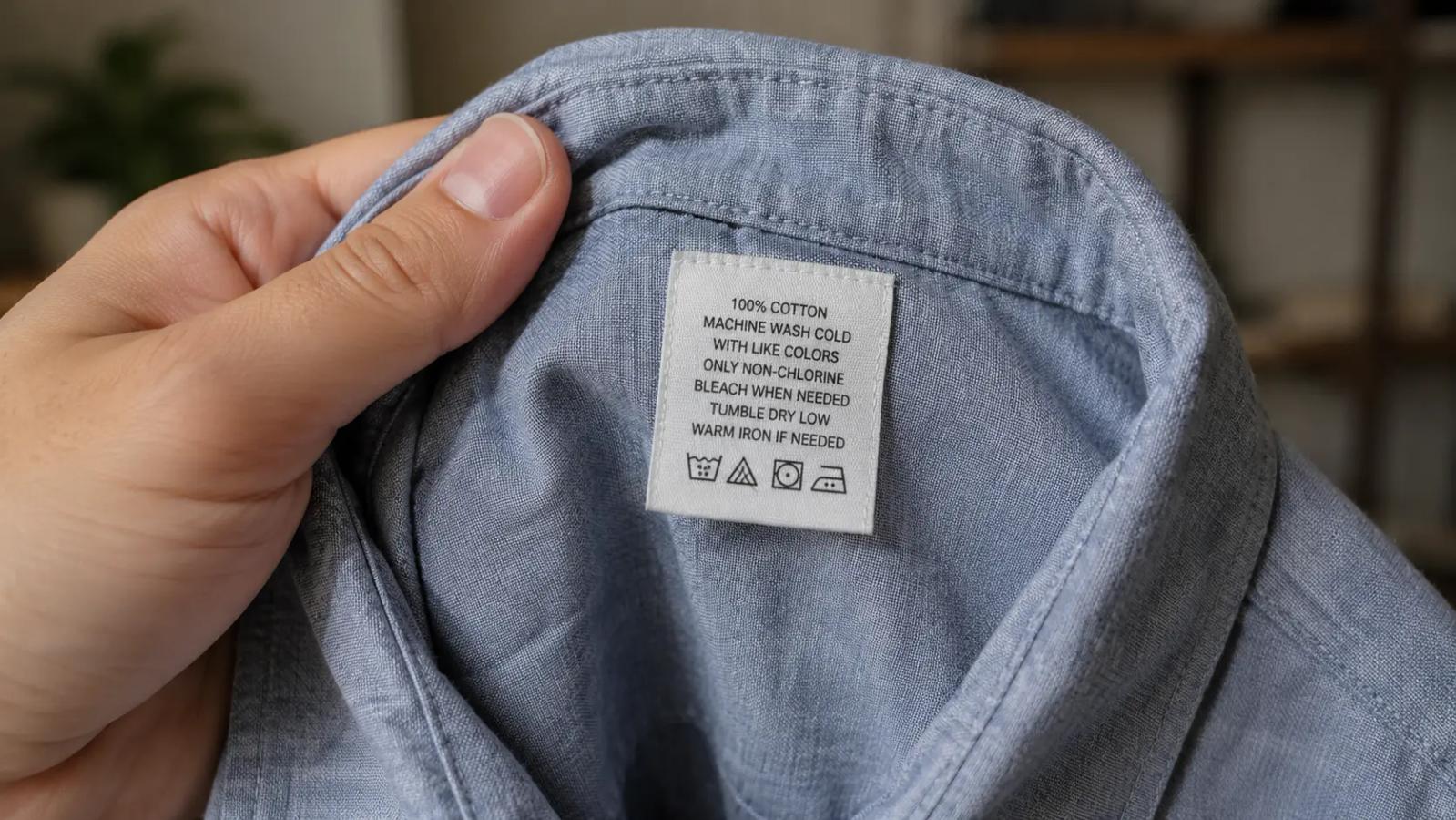
The garments that cause the most confusion are the ones people dry clean out of habit rather than necessity. A cotton dress shirt with no structure or lining rarely needs solvent cleaning. It needs a good wash and a proper fold. Treating every "nice" item as automatically dry-clean-only is usually just a habit. The fabric was fine the whole time.
What Are the Downsides of Dry Cleaning?
Dry cleaning has real downsides, worth knowing before you commit a garment to it. Dry cleaning isn't a bad choice. It's just the wrong default for anything that doesn't actually need it.
Cost is the obvious one. Per-item pricing adds up fastest on mixed loads, a few dress shirts and a couple of blouses sent out together can total more than an entire week's wash and fold bag, pound for pound. Turnaround is the less obvious one. Solvent cleaning, pressing, and any stain treatment involved take longer than a wash cycle, so a dry cleaning order rarely comes back as quickly as a wash and fold bag does. Then there's wear, which nobody warns you about: repeated solvent exposure over months and years can be harder on some fabrics than people expect, particularly on trims, linings, and anything with decorative stitching.
The cost only becomes a real downside when it's paid for something that never needed the protection in the first place.
Why Wash and Fold Doesn't Mean Less Clean
There's a quiet assumption baked into this whole comparison: that dry cleaning is somehow the more thorough, more hygienic option, and wash and fold is just the convenient one.

Dry cleaning solvent is designed to lift dirt and oil without damaging delicate fiber. Never built to be a disinfection process. Plain water alone isn't much better, research on fabric disinfection has found ordinary water washing barely reduces bacterial contamination at all. What actually works is oxidation, which is why some wash and fold providers, including MAXfresh, use ozone-based cold-water cleaning, shown in the same research to eliminate contamination that plain water left behind, without the heat that damages fabric or shrinks natural fibers over time. For a household with kids or anyone managing allergies, that's the actual point: it's not about a fresher smell, it's about what's left behind, or isn't, in fabric that gets worn against skin every single day.
That's why the cleaning method matters more than people assume once laundry volume is high and the stakes are real. It isn't only about how the clothes look when they come back.
Common Mistakes People Make With Wash and Fold and Dry Cleaning
The most expensive mistake is over-dry-cleaning: sending everyday, machine-washable clothes to the dry cleaner because it feels safer or more premium. It's the single most common and most avoidable cost in this whole comparison. And it doesn't just cost money. It costs time too, since a next-day wash and fold turnaround beats waiting on a dry cleaner for something that never needed one.
Ignoring a care label because a garment "seems sturdy" runs the other direction. Natural fibers like wool and silk don't give you a warning before they shrink or lose shape. By the time you notice, it's already done.
Mixing loads without saying anything causes the third kind of trouble. If you're sending both wash and fold and dry cleaning items to the same pickup and delivery service, label or separate them clearly. A good provider will always confirm anything unclear before it goes anywhere near a washing machine or a dry cleaner, but you save everyone time by sorting first.
Frequently Asked Questions
What's the difference between wash and fold and dry cleaning?
Water versus solvent. Wash and fold uses water and detergent to clean everyday clothes, towels, and bedding, then dries and folds everything for you. Dry cleaning skips the water entirely and uses a chemical solvent instead, built for delicate or structured garments that washing would damage.
Is wash and fold service worth it?
For anyone with a full hamper and limited time, yes. A wash and fold service is priced per pound, so a typical week's laundry costs a fraction of what dry cleaning the same volume would run. You get your time back. That's the actual value, week after week.
Is it better to dry clean or wash?
Neither is universally better. It's better to wash your everyday clothes, and better to dry clean anything structured, delicate, or labeled dry clean only. The question isn't which method wins, it's which one matches the garment in front of you.
If you've read this far, you probably already have a mental pile forming: the wash and fold stuff, and the handful of pieces you're not sure about. That's normal. The fix isn't overthinking every item, it's checking the label once and sorting accordingly. Once you do that a couple of times, it stops being a decision, whether you're doing it yourself or handing the wash and fold pile to someone else, and it just becomes how your laundry works.