


Why Your Workout Clothes Still Smell After Washing (And How to Actually Fix It)

hiiiii
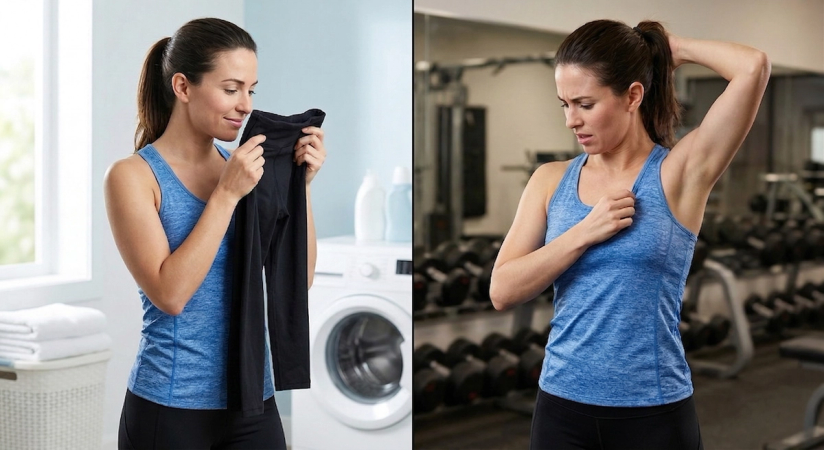
You pull your favorite leggings out of the dryer and they smell fine. You put them on, warm up for ten minutes, and suddenly the smell is back, sometimes worse than before the wash.
If this sounds familiar, you're not imagining it and you're not alone. Synthetic activewear is designed to perform, but it has a well-documented odor problem that standard laundry routines weren't built to handle. Here's what's actually happening in the fabric, and what genuinely works to fix it.
The problem isn't sweat itself. Sweat is mostly water, and water doesn't smell. The odor comes from bacteria — specifically the bacteria that feed on the proteins and oils in sweat and produce volatile compounds as a byproduct. The worse the smell, the higher the bacterial load.
Natural fabrics like cotton are porous and release bacteria and odor compounds fairly easily during a normal wash. Synthetic fabrics like polyester, nylon, spandex, and the blends used in most activewear behave completely differently. They're hydrophobic, meaning they repel water, which is exactly what makes them great for wicking sweat away from your skin during a workout. But that same property means a standard wash cycle struggles to penetrate deep into the fibers where bacteria have taken up residence.
A 2014 study published in Applied and Environmental Microbiology by researchers at Ghent University had 26 people wear cotton and polyester shirts through a one-hour spinning session, then had a trained odor panel evaluate them. The polyester shirts were rated significantly more intense, more musty, more sour, and less pleasant. The culprit: Micrococcus bacteria, which were found on almost all of the synthetic shirts but were largely absent from the cotton ones.
The reason polyester is such a good bacterial habitat goes beyond just the odor. Research on biofilm formation in textiles shows that polyester's hydrophobic surface absorbs more sebum — the natural oil your skin produces — than cotton does. That sebum is a food source for bacteria, and once they establish a biofilm inside the fiber weave, conventional washing often can't fully dislodge them. The odor comes back because the bacteria never fully left.
Why Hot Water Doesn't Help (and Often Makes It Worse)
The instinct when something smells is to wash it hotter. For activewear, this usually backfires, and it's worth understanding why hot water makes things worse on synthetics before defaulting to the hot cycle.
High heat causes synthetic fibers to contract and trap odor compounds more deeply into the fabric. It also degrades the elastic components of spandex blends over time, shortening the life of your gear. And because synthetic fabrics are hydrophobic, the water temperature doesn't really change how well moisture penetrates the fibers. Hot or cold, the water is sitting at the surface rather than soaking in.
Cold water, used with the right approach, is actually more effective for synthetic fabrics. This is part of why commercial ozone laundry systems, which clean using cold water and oxidation rather than heat, are so effective on activewear. Ozone doesn't need heat to work. It penetrates fabric at the molecular level, breaking down the organic compounds that cause odor and killing the bacteria responsible without requiring a temperature that damages your gear.
What Actually Works at Home
If your activewear has built up months of odor that regular washing won't touch, an oxygen bleach soak (OxiClean or similar) is worth trying before writing the clothes off. Mix a scoop in a bucket of cold water, submerge the clothing, and let it soak for two to four hours before washing as normal.
Unlike chlorine bleach, which damages synthetic fibers and is ineffective on protein-based odors anyway, oxygen bleach releases hydrogen peroxide in water — an oxidizer that attacks the organic compounds causing the smell without degrading the fabric. It's also safe for colored activewear.
If you're washing activewear at home, these are the approaches that address the real problem rather than just the surface symptoms.
White vinegar pre-soak. Add half a cup of white vinegar to cold water and soak your activewear for 30 minutes before washing. Vinegar is mildly acidic and helps break down the alkaline residue from detergent buildup that traps odors in synthetic fibers. It also disrupts bacteria on the fabric surface. It rinses out completely — your clothes won't smell like vinegar.
Use less detergent, not more. This is counterintuitive, but excess detergent is one of the most common causes of persistent odor in synthetic activewear. Because synthetic fabrics repel water, detergent that doesn't fully rinse out accumulates in the fibers and traps the bacteria you're trying to remove. If you're already using a full cap on gym clothes, try cutting it in half.
Baking soda in the drum. Add half a cup of baking soda directly with your activewear. It neutralizes odor compounds directly rather than masking them and helps soften the water so your detergent works more effectively.
Enzyme-based detergent. Look for detergents that list active enzymes on the label — protease specifically targets the protein-based residue from sweat. These are more effective on odor compounds than standard detergents.
Skip fabric softener entirely. Fabric softener coats synthetic fibers with a waxy residue that reduces wicking performance, attracts more bacteria, and traps odor compounds in the fabric. It's one of the worst things you can put on activewear.
Don't let it sit wet. The bacteria responsible for gym clothes odor thrive in warm, moist environments. Leaving sweaty clothes in a gym bag or hamper for hours before washing dramatically increases bacterial load and makes odor harder to remove. If you can't wash immediately, hang the clothes to air dry before putting them away.
Air dry when possible. The heat of a dryer can set odor compounds into synthetic fabric. Air drying — or low heat if you must use the dryer — preserves the fabric and gives any remaining odor a chance to dissipate rather than being baked in.
For Really Stubborn Odor: The Oxygen Bleach Soak
When It's Easier to Hand It Off
North County San Diego has no shortage of active people. Filled with triathletes, surfers, trail runners, cyclists, and gym regulars, most people here have more activewear than they'd like to admit, and keeping it smelling clean is a genuine time investment.
MAXfresh offers gym laundry pickup and delivery across Oceanside, Carlsbad, Encinitas, Vista, San Marcos, and the rest of North County. Our MAXfresh Water ozone system is specifically well-suited to synthetic fabrics eliminating bacteria at the source without the heat that degrades spandex and traps odors in polyester. We also use less than half the detergent of a standard home wash, which means no buildup accumulating in your fabrics over time.
Your gear comes back smelling genuinely clean, and the smell stays gone after you put it on.
Book a free pickup or call us at (760) 608-5855, Monday through Sunday, 9AM to 6PM.
MAXfresh Laundry is a pickup and delivery laundry service serving Carlsbad, Encinitas, Oceanside, San Marcos, Vista, and the greater North County San Diego area.