


How to Get Blood Out of Clothes (5 Proven Methods)

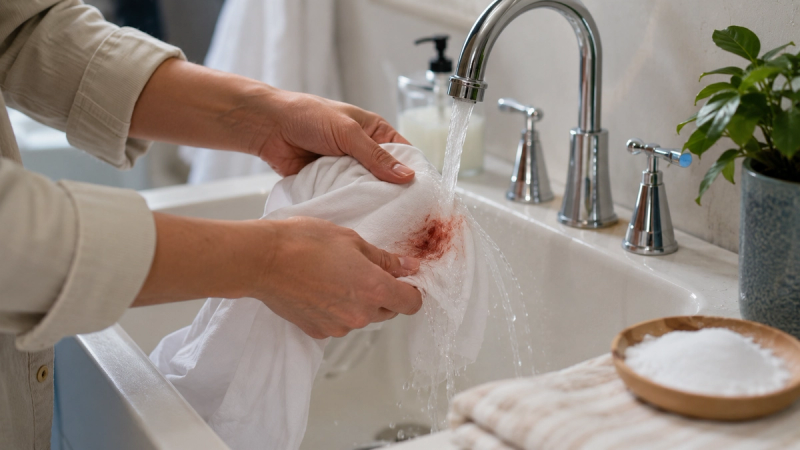
To get blood out of clothes, rinse the stain under cold water right away, then treat it with one of five household methods: hydrogen peroxide for white and light fabrics, dish soap for dark or colored clothes, white vinegar for a gentle lift, salt paste for delicates, or baking soda paste for dried, set-in stains. The one rule that overrides everything else is temperature. Hot water cooks the protein in blood and bonds it permanently to fabric, so always use cold.
The One Rule That Matters Most: Cold Water Only
Blood is a protein-based stain. When protein meets hot water, it coagulates and turns solid, the same way an egg white firms up in a hot pan. Once that happens, the blood locks onto fabric fibers and no detergent will pull it out.
Rinse every blood stain with cold water before you do anything else. Hold the stained fabric under a steady stream with the stain facing down, so the water pushes blood through and out the back rather than deeper into the weave. This single habit saves more garments than any product you can buy.
Method 1: Cold Water Rinse (Fresh Stains Only)
If the blood is still wet and has not dried, cold water alone may be all you need.
- Hold the stained fabric under a steady stream of cold water with the stain facing down.
- Gently rub the fabric against itself to loosen the blood.
- Keep rinsing for two to three minutes if the stain is fading.
- If a faint mark remains, move to Method 2 or 3.
This works on fresh blood on cotton, polyester, denim, and most everyday fabrics. It will not work on dried stains or stains that have sat for more than an hour.
Method 2: Hydrogen Peroxide (Best for White and Light Fabrics)
Hydrogen peroxide is the one of the most effective household treatments for blood stains you can buy at a pharmacy. It breaks down hemoglobin, and you will see it bubble and foam on contact.
- Lay the garment flat and place a towel behind the stain so the blood does not soak through.
- Pour 3% hydrogen peroxide directly onto the stain.
- Let it sit for five to ten minutes. Watch for fizzing.
- Blot with a clean white cloth or paper towel. Do not rub.
- Rinse cold, inspect, and repeat if a shadow remains.
- Wash cold and air dry.
Peroxide is a mild bleach, so it is safe on white and light fabrics but can lighten dark colors. Test it on a hidden area first, or skip it on black, navy, and dark garments and use Method 3 or 4 instead. Peroxide can also damage fragile fibers, so how to wash delicates without ruining them is worth a read before you treat silk, lace, or vintage pieces.
Method 3: Dish Soap and Cold Water (Best for Dark Clothes and Everyday Stains)
When you cannot use peroxide because the garment is dark or colored, dish soap is your next best tool. Liquid dish soap (Dawn works well) cuts through the fats and proteins in blood without bleaching the dye.
- Wet the stain with cold water.
- Apply a few drops of liquid dish soap directly to the stain.
- Gently work it in with your fingertips or a soft toothbrush.
- Let it sit for ten to fifteen minutes.
- Rinse cold, working from the back of the stain to push the blood out.
- Wash cold and air dry.
This is safe on all colors and most fabrics, including denim and polyester, and it is the go-to for period blood on dark underwear or jeans.
If dish soap is not strong enough, an enzyme-based liquid laundry detergent works the same way but is formulated to digest protein stains. Soak the stained area in cold water with a capful of enzyme detergent for thirty minutes, then wash cold. Enzyme detergents are color-safe and will not bleach dye.
Method 4: White Vinegar or Salt Paste (Best for Delicates and Set-In Stains)
For silk, lace, wool, and other delicates that cannot tolerate peroxide or enzyme cleaners, you have two gentle options. These are the safest home methods for fragile fibers.
White vinegar is a mild acid that dissolves blood without harsh chemicals. Soak a clean cloth in vinegar, dab it onto the stain, let it sit ten minutes, blot, and rinse cold. Test a hidden seam first.
Salt paste draws moisture and blood out of fabric and is gentle enough for the most fragile fibers. Mix two tablespoons of table salt with enough cold water to form a thick paste, spread it over the stain, work it in with your fingertips, let it sit thirty minutes, then rinse cold and repeat if needed.
Method 5: Baking Soda Paste (Best for Dried and Stubborn Stains)
If the blood has dried and been sitting for hours or days, you need something stronger. Baking soda is mildly abrasive and alkaline, which helps lift bonded protein from deep within fabric fibers.
- Mix three parts baking soda with one part cold water to form a thick paste.
- Apply generously to the dried stain.
- Work it in gently with a toothbrush.
- Let it sit for thirty to sixty minutes.
- Rinse cold.
- If the stain persists, add a few drops of hydrogen peroxide to the paste (on light fabrics only) and repeat.
- Wash cold and air dry.
For blood that has already been through the wash and dryer, this may take two or three applications. Some old stains are permanent, but many will fade significantly.
Textile experts at university extension programs also recommend a solution of one quart cold water, half a teaspoon of dish or laundry detergent, and one tablespoon of clear ammonia for set-in stains. Soak the area for fifteen minutes, blot, and rinse thoroughly. Never mix ammonia with bleach.
How to Get Blood Out of Sheets and Mattress Covers
Sheets are typically cotton or a cotton-poly blend, which responds well to treatment. The same methods above apply, so pick based on color: peroxide for white or light sheets, dish soap for dark.
- Strip the sheets immediately. Do not let blood sit overnight.
- Rinse the stained area under cold water from the back of the fabric.
- Treat with peroxide or dish soap, let sit ten to fifteen minutes, then rinse cold.
- Wash cold with your regular detergent.
- Air dry and inspect before putting sheets back on the bed.
If you are also rethinking how often bedding needs a wash, how often you should wash your sheets breaks down a realistic schedule by season, household size, and sleep habits.
For blood that has soaked through to a mattress, blot the area with a cloth soaked in cold water and a few drops of dish soap. Never soak a mattress. Use as little liquid as possible and blot dry.
How to Get Period Blood Out of Clothes
Period blood contains uterine tissue and mucus, which can make stains a bit more stubborn than regular blood. The methods above all work, but speed matters most. Rinse with cold water immediately, because the faster you act the easier removal is. From there, choose your method by color: dish soap or salt paste for dark underwear and jeans, peroxide for white or light clothing. If the stain has set, soak in cold water with a half-cup of salt for one hour before treating.
Never use warm water or put stained period underwear in the dryer until the stain is completely gone. Sorting stained items separately from the rest of your laundry also prevents blood from transferring onto other garments. How to sort laundry the right way walks through the full process so nothing bleeds onto clean clothes.
How to Get Blood Out of Clothes by Color
The biggest factor in choosing a method is fabric color, because some stain removers bleach dye. The same treatment that saves a white t-shirt can ruin a dark pair of jeans.
White clothes give you the widest range of options. Start with peroxide (Method 2). For set-in stains, follow up with a baking soda paste. For stubborn cases, add chlorine-free oxygen bleach (like OxiClean) to the wash cycle. It breaks down protein stains without the harshness of chlorine bleach, which you should never use on blood. If you can, dry white clothes in direct sunlight, because UV light naturally bleaches lingering shadows.
Colored and dark clothes require more care, because peroxide and oxygen bleach can lighten dye. Stick with dish soap (Method 3) or an enzyme-based detergent. Both break down blood proteins without touching the color. If you want to try peroxide on a colored garment, test it on a hidden seam first and wait five minutes. If the color has not changed, you can use it carefully. If it lightens the test spot, stick with dish soap or enzyme detergent.
On-the-Go: Removing Blood When You Cannot Wash Right Away
Sometimes you get a blood stain at work, at school, or out in public and cannot run a sink full of cold water. Here is what works when you are away from home:
- Cold water and paper towels. Even a restroom sink helps. Hold the stain under cold running water and blot. Do not rub.
- Hand sanitizer. Most contain alcohol, which can lift fresh blood. Dab a small amount on the stain, let it sit a minute, and blot. Test on a hidden area first, because alcohol can affect some dyes.
- Stain remover pen. Products like Tide to Go are designed for this situation. Press the tip onto the stain to release the solution, then blot. Treat the garment properly once you get home.
What NOT to Do
- Do not use hot water. It coagulates the protein and sets the stain permanently.
- Do not put a blood-stained garment in the dryer until the stain is fully removed.
- Do not use chlorine bleach on blood. It does not remove protein and can react with blood to create a harder-to-remove discoloration.
- Do not rub the stain. Always blot. Rubbing spreads the blood and pushes it deeper.
- Do not mix ammonia with bleach. The combination produces toxic gas.
When to Seek Professional Help
Some blood stains are beyond what home methods can handle. If the stain is very large, covers a large area of the garment, sits on an expensive or sentimental piece, or has already been through the dryer and resisted repeated treatment, a professional cleaner may be your best option. Professional cleaners have access to enzyme pre-soaks and industrial-grade equipment that can break down proteins more effectively than home products. Ask whether they use enzyme-based or ozone-infused wash systems, since both are specifically effective on organic protein stains.